Thursday, October 17, 2013

BBC to Name Head of VOD Service, Treat It Like Fifth TV Channel


LONDON – The BBC is planning to name a controller of its VOD service, the BBC iPlayer, to effectively establish it as a fifth network of the U.K. public broadcaster, director of television Danny Cohen said here Tuesday evening.


His comments came during a Royal Television Society event following a big vision speech last week, in which new BBC director general Tony Hall outlined his strategy and priorities.


Cohen, who previously ran flagship network BBC One and now oversees all TV output of the broadcaster except for news, on Tuesday discussed the implications of Hall's plans.


In his first major speech since taking charge of the BBC in April, Hall had pledged to  enhance the iPlayer on-demand and catch-up service, which is available online and on TV platforms, and simplify management structures, among other things. Hall was appointed last fall, less than two weeks after George Entwistle abruptly resigned as director general after only 54 days amid the fallout from the growing Jimmy Savile sex abuse scandal.


Cohen said he would create a controller post for the iPlayer for an executive who will "sit alongside" the heads of the BBC's four TV channels. He added that he expects to know more about the role by January, with the BBC planning to "begin to see the iPlayer as our fifth channel."


Asked about Hall's plans to offer original content and channels on the iPlayer, Cohen said "we'll do a combination of permanent online channels and pop-up online channels." Pop-up channels would be tied to big events, such as the Wimbledon tennis tournament and the Glastonbury music festival, he explained. BBC's Radio 1 channel and arts could get a permanent channel on the iPlayer.


Original content on the iPlayer will come in the form of short-form content, mostly for younger audiences, among other things, Cohen said.


He said the need for original content on the iPlayer became apparent during a recent trip that Hall made to Silicon Valley. Executives from such tech giants as Facebook and Google told him that the BBC had the best video player in the world. But to retain that position in the coming years was key, Cohen explained. "Part of the answer is partly how we curate it," he said.


The BBC's head of television was also questioned where the broadcaster would cut costs to reach a target of $160 million (100 million pounds) in annual savings mentioned by Hall. Cohen said the broadcast department and BBC News would be key areas of costs, but added that he had no details to share yet.


Will broadband delivery of content  supersede broadcast delivery in Britain any time soon? Cohen said he expects a hybrid model in the coming years, but "I think it will eventually." But he argued that would only happen in 10 years, maybe even more.


Asked about the state of U.K. TV dramas amid the popularity of Danish shows, such as The Bridge and Borgen, and U.S. hits, such as Breaking Bad, he said Britain has Sherlock, Call the Midwife, Downton Abbey and other hits.


Americans also often tell him that they find British drama great. Cohen argued that the debate about the health of drama in various countries seemed to be a case of the grass always seeming greener on the other side.


Asked about the ratings struggle of The Voice UK on BBC One on Saturdays, Cohen said the first two seasons both saw audience drops during the live stage of the singing competition. Still, the ratings have made it the BBC's biggest entertainment show launch since Strictly Come Dancing. Plus, the show attracts young audiences.


"It's bloody, bloody good for us," Cohen concluded. I have no particular concerns about The Voice."


Asked about commercial rival ITV, which has such hits as Downton Abbey, Broadchurch and The X Factor, Cohen said: "I think it's in fantastic shape." But he said that BBC One is also doing really well.


With both networks getting up to 10 million viewers for big shows despite a much smaller population in the U.K. than the U.S., the two broadcasters compare well to U.S. networks, he said. And he said the strength of both makes both more competitive. "It is definitely good for the BBC to have a strong ITV," Cohen argued.


The BBC TV boss was also quizzed about Tuesday morning's news that hit baking competition The Great British Bake Off would next season move from BBC Two to the flagship BBC One network. When shows get a certain audience size, they can get even more viewers on BBC One, Cohen explained. The same phenomenon happens when an Andy Murray tennis match moves from BBC Two to BBC One, he said.


"They tend in general to be bigger" in terms of audience reach when moving to BBC One, Cohen said. "Channels do still matter. I don't know why that is still the case. It is just a click of a button."


So, will Bake Off top its current 7 million or so viewers once it airs on BBC One? "I think it has a very good chance of doing that," Cohen said, citing the success of past moves to the flagship channel of such shows as  The Apprentice and MasterChef.


Was BBC Two controller Janice Hadlow sad or mad about the show's move? "No channel controller likes it when that happens," Cohen said. "That's part of being a team player."


But he vowed not to dilute the show's voice and feel by moving it to the broader-based channel. "Our plan is not to change Bake Off at all," Cohen said.


E-mail: Georg.Szalai@THR.com
Twitter: @georgszalai


Source: http://feedproxy.google.com/~r/thr/international/~3/xAXeEPLlN2A/story01.htm
Similar Articles: Jamie Dornan   oakland raiders   Zayn Malik   Myla Sinanaj   Hannah Anderson  

Iran talks with West _ but battles over outreach

In this picture taken on Friday, Nov. 2, 2012, Iranian school girls show their hands with writing in Persian in support supreme leader Ayatollah Ali Khamenei, denouncing the U.S. and one of them with word "Nuclear Scientist" in an annual state-backed rally in front of the former U.S. Embassy in Tehran, Iran, commemorating 33rd anniversary of the embassy takeover by militant students. On Nov. 4, 1979, students who believed the embassy was a center of plots against Iran held 52 Americans hostages for 444 days, and the US severed formal diplomatic ties in response. In a sharp counterpoint to the Western outreach by President Hassan Rouhani’s government, hard-line factions in Iran have amplified their bluster and backlash in messages that they cannot be ignored in any diplomatic moves with Washington either in the nuclear talks or beyond. (AP Photo/Vahid Salemi)


In this picture taken on Friday, Nov. 2, 2012, Iranian school girls show their hands with writing in Persian in support supreme leader Ayatollah Ali Khamenei, denouncing the U.S. and one of them with word "Nuclear Scientist" in an annual state-backed rally in front of the former U.S. Embassy in Tehran, Iran, commemorating 33rd anniversary of the embassy takeover by militant students. On Nov. 4, 1979, students who believed the embassy was a center of plots against Iran held 52 Americans hostages for 444 days, and the US severed formal diplomatic ties in response. In a sharp counterpoint to the Western outreach by President Hassan Rouhani’s government, hard-line factions in Iran have amplified their bluster and backlash in messages that they cannot be ignored in any diplomatic moves with Washington either in the nuclear talks or beyond. (AP Photo/Vahid Salemi)


In this picture taken on Friday, Nov. 2, 2012, a female Iranian demonstrator holds up a burning representation of the U.S. flag while a caricature of President Barack Obama is set on fire, in an annual state-backed rally in front of the former U.S. Embassy in Tehran, Iran, commemorating 33rd anniversary of the embassy takeover by militant students. On Nov. 4, 1979, students who believed the embassy was a center of plots against Iran held 52 Americans hostages for 444 days, and the US severed formal diplomatic ties in response. In a sharp counterpoint to the Western outreach by President Hassan Rouhani’s government, hard-line factions in Iran have amplified their bluster and backlash in messages that they cannot be ignored in any diplomatic moves with Washington either in the nuclear talks or beyond.(AP Photo/Vahid Salemi)


FILE-- In this Friday, Nov. 2, 2012, file photo, Iranian female demonstrators burn a representation of U.S. flag, and a caricature of President Barack Obama, in an annual state-backed rally in front of the former U.S. Embassy in Tehran, Iran, commemorating 33rd anniversary of the embassy takeover by militant students. On Nov. 4, 1979, students who believed the embassy was a center of plots against Iran held 52 Americans hostages for 444 days, and the US severed formal diplomatic ties in response. In a sharp counterpoint to the Western outreach by President Hassan Rouhani’s government, hard-line factions in Iran have amplified their bluster and backlash in messages that they cannot be ignored in any diplomatic moves with Washington either in the nuclear talks or beyond. (AP Photo/Vahid Salemi, File)


FILE-In this Friday, Nov. 2, 2012, file photo, Iranian girls, one of them holding up a caricature of President Barack Obama while others hold pro-government posters, attend an annual state-backed rally in front of the former U.S. Embassy in Tehran, Iran, commemorating 33rd anniversary of the embassy takeover by militant students. On Nov. 4, 1979, students who believed the embassy was a center of plots against Iran held 52 Americans hostages for 444 days, and the US severed formal diplomatic ties in response. In a sharp counterpoint to the Western outreach by President Hassan Rouhani’s government, hard-line factions in Iran have amplified their bluster and backlash in messages that they cannot be ignored in any diplomatic moves with Washington either in the nuclear talks or beyond. (AP Photo/Vahid Salemi, File)


TEHRAN, Iran (AP) — The Iranian foreign minister's parting words in Geneva carried hopes that the U.S. and other world powers could begin closing the gap with Tehran over its nuclear program. He returns home with perhaps an even tougher challenge at finding common ground.

In a sharp counterpoint to the Western outreach by President Hassan Rouhani's government, hard-line factions in Iran have amplified their bluster and backlash in messages that they cannot be ignored in any diplomatic moves with Washington either in the nuclear talks or beyond.

They also hold important sway over the pace and direction of Iran's nuclear program through the Revolutionary Guard, the single most powerful institution in Iran. Without its clear backing, the West and its allies could grow increasingly skeptical over Rouhani's ability to deliver on efforts to ease fears that Iran could be moving toward an atomic weapon or a so-called threshold state — without an actual bomb, but with all the expertise and material in place.

"Iran's hard-liners are the not-so-silent partners in everything that Rouhani has set in motion," said Scott Lucas, an Iranian affairs expert at Britain's Birmingham University. "The Revolutionary Guard is never a bystander in Iran."

It's still unclear whether the Guard would agree to potential demands such as increased U.N. monitoring at nuclear and related sites. So far, however, there have few smooth patches with Rouhani. His outreach has brought swift criticism from the Guard and its wide network, including a national paramilitary force known as the Basij.

Even the smallest gestures toward the U.S. by Iran poke at a nest of complications: Deep historical grievances, perceptions of national pride and a culture of "enemy" resistance that runs to the core of groups such as the Revolutionary Guard, which is instinctively wary about anything that could chip away at its vast influence that stretches from the military to the economy.

For Rouhani and his allies, it also means a possibly short leash.

Iran's top decision-maker, Supreme Leader Ayatollah Ali Khamenei, has allowed Rouhani to reach out to the U.S. The immediate goal is trying to address concerns over Iran's nuclear program and getting painful economic sanctions rolled back in return. Two days of talks in Geneva this week between Iran and envoys from six nations — the permanent U.N. Security Council members plus Germany — ended with rare optimism that at least some new paths have been opened to explore.

But all noted that the negotiating process could drift well into next year, and it remains unclear whether Iran could offer verifiable concessions needed to end the deadlock. In Washington, State Department spokeswoman Jen Psaki said Iran had offered "a proposed approach" on moving the talks forward.

The West fears Iran's uranium enrichment labs eventually could churn out weapons-grade material, and some in Israel and elsewhere worry the outreach and goodwill by Rouhani is merely a ploy to buy time. Iran insists it does not seek nuclear weapons.

It's likely that Khamenei will keep his backing for Rouhani's initiatives as long as it seems Iran is moving toward it objectives of easing sanctions, which have strangled the economy by cutting into vital oil exports and blocking the country from international banking networks.

But any stumbles — such as the West demanding sweeping United Nations inspections — certainly would bring a barrage of outrage from Iranian hard-liners. That, in turn, could pressure Khamenei to reconsider his support for Rouhani's bid at historic detente with Washington.

"The Rouhani government understands that," said Ehsan Ahrari, a Virginia-based strategic affairs analyst. "It is operating under a very short window of opportunity."

This is part of the motivation behind Foreign Minister Mohammad Javad Zarif's insistence for talks to quickly reconvene. The next two-day round is scheduled to begin Nov. 7 in Geneva.

At the same time, Iran's Revolutionary Guard and others are making it clear that Rouhani's government will get no free pass in expanding dialogue with Washington after a nearly 34-year diplomatic freeze.

Hard-line factions, including Guard commanders, have pledged to stage a major anti-U.S. rally Nov. 4, the anniversary of the takeover of the U.S. Embassy in 1979 in the wake of the Islamic Revolution. The date is marked each year by gatherings outside the former embassy's brick walls, which are covered with anti-American murals. But the fervor has waned in recent years, with authorities bringing school children by bus to help fill out the crowds.

Gen. Masoud Jazayeri, a senior Guard commander, said a "death to the U.S. committee" will be set up to organize next month's rally, promising chants of "death to America" louder than any previous years.

It's a direct response to appeals this month by Rouhani's political mentor, former President Akbar Hashemi Rafsanjani, to drop the familiar slogan from events such as Friday prayers at Tehran University. In a speech Tuesday in the western city of Kermanshah, Rafsanjani repeatedly was interrupted by opponents bellowing anti-American chants.

Rafsanjani countered that Rouhani's critics are holding the nation back.

"If extremists allow us to have relations with the world, many of the problems of the country will be resolved," he told a group of industrialists and businessmen. "Otherwise, we will get nowhere."

These kind of ideological collisions are not new in Iran. They flared nonstop during the 1997-2005 presidency of reformist Mohammad Khatami. In 2009, they triggered the worst domestic unrest since the Islamic Revolution following the disputed re-election of President Mahmoud Ahmadinejad.

But even deeper questions have been dredged up by the overtures to Washington opened by Rouhani at the U.N. in New York, which included a groundbreaking phone call from President Barack Obama.

It challenges a power structure that gives the Revolutionary Guard and other hard-liners vast controls over policymaking, and forces many Iranians to re-evaluate generations of anti-American views that go back to a U.S.-backed coup that reinstalled the pro-Western shah dynasty in 1953.

"It scares Iran's hard-liners like almost nothing else can," Mustafa Alani, a political analyst at the Gulf Research Center in Geneva. "Taking away the fear of the 'enemy' — even if just a little bit for now — strikes directly at the cornerstones of groups like the Revolutionary Guard."

Rouhani's government has proposed conducting an opinion poll on U.S. relations in a maneuver to possible muffle hard-liners. The idea, however, has been blasted by former Foreign Minister Ali Akbar Velayati, a senior adviser to Khamenei.

"To offer their opinion, the people need to have access to secret information," he said. "And it will be contrary to national interests to expose the secrets because the enemy will learn about it."

___

Murphy reported from Dubai, United Arab Emirates

Associated PressSource: http://hosted2.ap.org/APDEFAULT/cae69a7523db45408eeb2b3a98c0c9c5/Article_2013-10-17-Iran-Rouhani's%20Hurdles/id-4a9c8f9273fc48f0852a3f80ae8f9925
Category: Dreamchasers 3   Nate Burleson   emmy winners   tracy mcgrady   Erwin Schrödinger  

iPad 5, iPhone 5S to drive Apple's holiday season -- report

The iPhone 5S is outselling the iPhone 5C at a ratio of 2.5-to-1, according to one analyst, and that pace should continue through the rest of the year.


Apple's iPhone 5S is significantly outpacing the iPhone 5C in sales, and at least one analyst believes that trend will continue into the holiday season.


The iPhone 5S is outselling the iPhone 5C at a ratio of 2.5-to-1, Canaccord Genuity analyst Michael Walkley wrote in a note to investors on Wednesday. That news is obviously good for Apple, which generates more revenue on the iPhone 5S than iPhone 5C, but it also cements Walkley's belief that Apple will sell 52.5 million iPhones during the last quarter of the year.


The first quarter of 2014 should also be bolstered by China Mobile, Walkley said. The crown jewel in Apple's wireless plans should finally start shipping the iPhone early next year to its more than 750 million subscribers, which could add over 10 million iPhone unit sales to Apple's financials, Walkley said.


The iPad 5 could also be a winner for Apple through the rest of the year. Walkley believes Apple will announce a major iPad 5 redesign at its special event on October 22 that will spur increased sales. Walkley is also unsure when the iPad Mini with Retina display might hit store shelves, further complicating sales forecasts on that device. Therefore, in the short-term, Apple could expect the iPad 5 to drive its tablet sales.


"We are modeling iPad 5 and iPad Mini units at 12.9M/11.5M for the December quarter," Walkley wrote to investors. "We anticipate this sales mix will reverse to 8.4M/14.4M in the March quarter driven by the delayed launch of a refreshed iPad Mini with Retina display and increased iPad Mini demand from international markets, particularly in China around Chinese New Year."


One other tidbit from the Walkley report: he expects Apple to launch its long-awaited smartwatch and television at some point in its 2015 fiscal year, which starts in October of 2014.


Walkley has reiterated his "buy" recommendation on Apple shares and has upped his 12-month price target to $580.


Source: http://news.cnet.com/8301-13579_3-57607727-37/ipad-5-iphone-5s-to-drive-apples-holiday-season-report/?part=rss&tag=feed&subj=News-Apple
Related Topics: Preachers of LA   drew brees   9 news   Lady Gaga Applause   nate robinson  

Post-Snowden, U.K. Parliamentary Committee To Probe Individual Privacy Vs. National Security


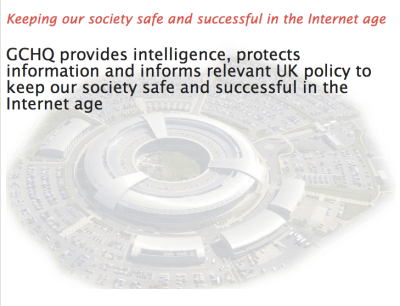
A U.K. parliamentary committee has widened the scope of a planned inquiry into the legislative framework governing national intelligence agencies’ access to private information, triggered by the PRISM revelations in the U.S. It will now consider more broadly the impact of mass surveillance on individuals’ right to privacy.


The Intelligence and Security Committee (ISC) said today it will broaden the scope of its forthcoming inquiry — in order “to examine the appropriate balance between privacy and security in an internet age”.


The ISC announced its intention to probe the work of GCHQ, the UK’s spy agency, back in July — following allegations that it had broken U.K. law by intercepting communications under the U.S. PRISM programme, noting at the time:


Stories in the media have asserted that GCHQ had access to PRISM and thereby to the content of communications in the UK without proper authorisation. It is argued that, in so doing, GCHQ circumvented UK law. This is a matter of very serious concern: if true, it would constitute a serious violation of the rights of UK citizens.


The committee said today it has satisfied itself that GCHQ “has not circumvented or attempted to circumvent U.K. law” but said it believes it is still necessarily to examine whether the current statutory framework governing access to private communications is fit for purpose.


Specifically it is looking at what it calls the  ”complex interaction” between three pieces of legislation: the Intelligence Services Act, the Human Rights Act and the Regulation of Investigatory Powers Act — “and the policies and procedures that underpin them”.


ISC chairman, Sir Malcolm Rifkind, said the committee will address concerns about the “suggested extent” of the capabilities available to the intelligence agencies, commenting further:


There is a balance to be found between our individual right to privacy and our collective right to security. An informed and responsible debate is needed. The Intelligence and Security Committee of Parliament has therefore decided to broaden the scope of its forthcoming inquiry to consider these wider questions, in addition to those relating to the existing legislative framework.


As part of this wider remit, the committee said it will be taking written evidence “more broadly” — so not just from the classified sources it has access to but also inviting submissions from the public — in order to “consider the full range of opinions”.


It also plans to hold oral evidence sessions — some of which it said it expects to hold in public. This is not a full-blown public inquiry but is at least more open than the ISC’s typical modus operandi. Still, it remains to be seen how rigorous the inquiry will be, and whether this is more an attempt to whitewash criticism of GCHQ and to avoid a more detailed public probe of its activities.


U.K. newspaper The Guardian has been publishing information on GCHQ’s activities sourced from information provided by security agency whistleblower Edward Snowden — including details of Tempora, a GCHQ programme which the paper describes as a “large-scale ‘Internet buffer’” that stores Internet content for three days and metadata for 30 — via the agency tapping into fibre optic cables carrying phone calls and Internet data — and the harvested info then being shared with the NSA.


The string of revelations about GCHQ’s surveillance activities has ramped up political pressure for a wider inquiry into its practices — even as The Guardian has come under sustained attack from some U.K politicians and portions of the U.K. media for making sensitive security information public.


Source: http://feedproxy.google.com/~r/Techcrunch/~3/nvBjkzHL91E/
Tags: foxnews   Grand Theft Auto 5 cheats   notre dame   backstreet boys   Royal Baby Watch  

Top Ten: Track masters | Top Ten


Sebastian Vettel, Red Bull, Suzuka, 2013Sebastian Vettel’s[1] victory at Suzuka last weekend continued his sensational run in the Japanese Grand Prix. Vettel has now won on four of his five appearances at Suzuka, and is yet to finish off the podium or start from anywhere but pole position.


But Vettel is by no means the only driver to stamp his authority on a particular Grand Prix. Here are ten other drivers who have pulled something out of the bag at their favourite racetrack.


Michael Schumacher and Magny-Cours


Michael Schumacher[2] could warrant a list of his own, so great was his supremacy of Formula 1 in his Ferrari heyday. Incredibly, he won five or more races at ten different circuits during his Grand Prix career.


He took an astonishing eight victories at Magny-Cours between 1994 and 2006. The most memorable of which was undoubtedly his 2002 triumph, snatched from Raikkonen in the final laps. That allowed Schumacher to secure his record-equalling fifth world championship victory – and win the title earlier than anyone ever has.


Kimi Raikkonen and New Spa


Kimi Raikkonen, Ferrari, Spa-Francorchamps, 2007Given that-Spa Francorchamps is considered the ultimate driving challenge on the F1 calendar, it says a lot for Kimi Raikkonen’s[3] talent that he has enjoyed such success in the Belgian Grand Prix.


Between 2004 and 2009 he took four victories in five races at Spa. Another victory looked possible in 2008 until he crashed out of a battle for the lead on the penultimate lap in slippery conditions.


Were it not for Raikkonen’s sabbatical in 2010 and 2011, and had the Belgian Grand Prix not been left off the calendar in 2003 and 2006, he might well have chalked up even more victories in the Ardennes.


Jim Clark and Old Spa


Long before Raikkonen was even born, another quiet man with an extraordinary talent was bossing a very different Spa. Jim Clark took four consecutive victories on the original 14 kilometre track, a terrifyingly quick and perilous blast through the Belgian countryside.


No one could touch Clark at Spa from 1962 to 1965. His 1963 victory was one of the greatest examples of his driving genius. On a typically rainy Spa day, Clark flew from eighth on the grid into a five-minute lead, lapping all but one of his competitors on his way to the chequered flag.


Yet he held no affection for the circuit, which had claimed the lives of fellow British racers Chris Bristow and Alan Stacey in a pair of appalling crashes at the 1960 race.


Jacky Ickx and the Nurburgring Nordschleife


Jacky Ickx’s astonishing grand prix debut at the Nordschleife in 1967 marked him out as a star of a the future. Driving an F2 car, Ickx set the third-fastest time in qualifying, beaten only by Denny Hulme[4] and Jim Clark’s F1 cars.


Under the rules of the time he had to start at the back with the other F2 cars but in the race quickly made his way up to fifth before retiring.


He went on to take two wins at the track despite not always enjoying the best machinery, and took four poles in five years.


Lewis Hamilton and the Hungaroring


Lewis Hamilton, Mercedes, Hungaroring, 2013Lewis Hamilton’s first victory for Mercedes at the Hungarian Grand Prix earlier this year was his fourth at the Hungaroring, making him the joint most successful driver at the Budapest circuit along with Schumacher.


In fact, in the seven races Hamilton has started in Hungary, only once was he not in contention for victory. A puncture meant he was unable to capitalise on Felipe Massa’s[5] late retirement from the lead in 2008, while he was the architect of his downfall three years later, throwing away a likely win thanks to a run in with Paul di Resta and a poor tyre choice during a mid-race rain shower.


Hamilton also has an impressive record in Canada. He has won on three of his six visits to the Circuit Gilles Villeneuve – including his first ever Grand Prix victory – and started from pole on four occasions.


Alain Prost and Jacarepagua


There were few complaints when the Brazilian Grand Prix was moved from the dull Jacerapagua circuit in Rio de Janeiro back to Sao Paulo’s Interlagos in 1990, but Alain Prost[6] can be forgiven for being disappointed with the switch.


The four-times had a superb record at Jacerapagua, winning half of the ten F1 races held on the circuit from 1982 to 1989. However the first of these was deeply controversial: Prost finished third on the road but was handed the win when Nelson Piquet[7] and Keke Rosberg were disqualified for being underweight.


The Jacerapagua circuit has since been consigned to the history books, as it was recently demolished to make way for a training ground to be used by athletes during the 2016 Olympic Games.


Mika Hakkinen and the Circuit de Catalunya


The Circuit de Catalunya is an ‘aero’ circuit and with Adrian Newey’s McLarens at his disposal Mika Hakkinen[8] took three wins on the trot – and narrowly missed out on a fourth.


Leading comfortably at the end of the 2001 race Hakkinen’s McLaren suffered a disastrous last-lap clutch failure.


With his victory in the 1997 European Grand Prix at Jerez also on his record, Hakkinen was more successful in Spain than any other country during his F1 career. Curiously, since he left the team McLaren have only won one of the subsequent 17 races held in Spain.


Nigel Mansell and Silverstone


Nigel Mansell, Williams, Silverstone, 1987Nigel Mansell[9] famously claimed that the support of the British fans shaved seconds off his lap time around Silverstone.


Given his record on home ground we should not be too quick to doubt him. After a debut Grand Prix victory at Brand Hatch in 1985, Mansell went on to take four victories for Williams at Silverstone between 1986 and 1992.


The most memorable triumph was his 1987 victory, in which he reeled in team mate Piquet and, ignoring the warnings from his fuel gauge, dived past his team mate to win. He ran out of fuel after crossing the finishing line, and was mobbed by delirious fans.


Nelson Piquet and Monza


Surely the most overlooked driver to have won three world championships, Nelson Piquet[10] was a top-drawer talent who won races and championships against the likes of Prost, Senna and Mansell.


Piquet revelled in power tracks and Monza was suited him to a tee. His record at the Italian Grand Prix was excellent: he won four races at Monza during the eighties while at Brabbham and Williams.


In 1987, en route to his third title, he scored an especially sweet victory, putting one over rival Brazilian star Senna, inheriting victory when the Lotus driver skidded off at the Parabolica late in the race.


Ayrton Senna and Monaco


Ayrton Senna, Toleman TG184, Monaco, 1984No circuit is more synonymous with the Ayrton Senna[11] legend than Monaco. From his famous charge through the field in a Toleman in 1984 to holding off a race long challenge by Mansell in his dominant Williams in 1992, many of the great Senna memories were forged on the streets of the principality.


The Brazilian star topped the Monaco podium six times between 1987 and 1993, his success only interrupted when he crashed out of a 50-second lead in 1988. Senna put that unhappy memory to bed with a run of five consecutive wins on the street circuit, and we’ll never know how long that record might have stretched if it were not for his tragic death at Imola in 1994.


Of course before Senna came along Graham Hill was ‘Mr Monaco’. Five victories on the harbour-side circuit between 1963 and 1969 accounted for more than a third of his career total of 14 race wins.


Over to you


Which other drivers do you consider masters of a particular track – in F1 and other motor sports? Have your say in the comments.


F1 top tens


Read more top tens[12]

Image © Red Bull/Getty, Daimler/Hoch Zwei, Williams/LAT, Ferrari/Ercole Colombo, Donington/Sutton


References

  1. ^ Sebastian Vettel (www.f1fanatic.co.uk)
  2. ^ Michael Schumacher (www.f1fanatic.co.uk)
  3. ^ Kimi Raikkonen (www.f1fanatic.co.uk)
  4. ^ Denny Hulme (www.f1fanatic.co.uk)
  5. ^ Felipe Massa (www.f1fanatic.co.uk)
  6. ^ Alain Prost (www.f1fanatic.co.uk)
  7. ^ Nelson Piquet (www.f1fanatic.co.uk)
  8. ^ Mika Hakkinen (www.f1fanatic.co.uk)
  9. ^ Nigel Mansell (www.f1fanatic.co.uk)
  10. ^ Nelson Piquet (www.f1fanatic.co.uk)
  11. ^ Ayrton Senna (www.f1fanatic.co.uk)
  12. ^ Read more top tens (www.f1fanatic.co.uk)
Source: http://feedproxy.google.com/~r/f1fanatic/~3/f0bf9WbfBMg/
Similar Articles: Cleveland Indians   National Cheeseburger Day   Wentworth Miller   Miley Cyrus Vmas 2013 Youtube   Ichiro Suzuki  

Wednesday, October 16, 2013

Here's Why the iPhone 5S Accelerometer Is So Screwed Up

Here's Why the iPhone 5S Accelerometer Is So Screwed Up

A few weeks ago we confirmed reports that the iPhone 5S motion sensors were embarrassingly off. Some enterprising devs have investigated the problem, and figured out that at its root, it's indeed a hardware design issue that Apple either overlooked or ignored. The good news is that there's a fix coming—but not from Apple.

Read more...


Source: http://feeds.gawker.com/~r/gizmodo/full/~3/9q_eX96jUMY/heres-why-the-iphone-5s-accelerometer-is-so-screwed-up-1445966306
Related Topics: wes welker   clemson   Jodi Arias   Call Of Duty Ghosts   Sean Sasser  

House to vote on debt-ceiling deal Wednesday: lawmaker


Washington (AFP) - US lawmakers were poised Wednesday to vote to raise the country's debt limit and re-open the federal government, after an eleventh-hour deal to save Washington from a historic default.


Republican and Democratic senators announced a deal that would stave off the most pressing crisis by extending the US Treasury's borrowing authority until February 7.


After several chaotic days running up to Thursday's deadline, the agreement would also immediately open shuttered federal agencies, bringing hundreds of thousands of furloughed employees back to work, and fund government through January 15.


"The compromise we reached will provide our economy with the stability it desperately needs," Senate Majority Leader Harry Reid said, after working behind closed doors with his Republican rival Senator Mitch McConnell.


According to the White House, President Barack Obama hailed the agreement and urged Congress to act swiftly to ensure that "the government reopens and the threat of default is removed."


The hard-won compromise still needs to pass both chambers of Congress -- including an unpredictable House of Representatives -- before it reaches Obama's desk.


After the deal was unveiled, House speaker John Boehner bowed to the inevitable and admitted there were "no reasons for our members to vote no today," while maintaining that Republicans didn't like the deal.


"We fought the good fight, we did everything we could. They just kept saying no, no, no," Boehner said of lawmakers in President Barack Obama's Democratic Party.


"Our drive to stop the train wreck that is the president's health care law will continue," Boehner added, apparently seeking to placate hard-right Tea Party-backed members of the Republican Party who have opposed Obama's health care reform.


Lawmakers said they believed the legislation could pass Congress Wednesday, allowing the government to borrow beyond its current $16.7 trillion debt ceiling to meet its obligations.


The US economy was faced with entering unchartered waters, with the Treasury saying that from Thursday it would no longer be able to borrow more money to meet its obligations and avert a devastating debt default.


In a sign of the confusion, the White House insisted that the final deadline was midnight Thursday -- 24 hours later than expected by many as the end point for raising the debt limit.


Ratings firm Standard & Poor's said Wednesday that the government shutdown had already taken $24 billion out of the economy and will cut growth in the fourth quarter significantly.


While the deal was welcomed on Wall Street, with the Dow Jones Industrial Average and the broader S&P 500 index up almost 1.4 percent, the signs of a close to humiliating, rushed last-minute deal were plain to see.


"I hope that we're nearing the end of this ordeal, this impasse which never should have happened in the first place," said Senator Susan Collins, a Republican who has led efforts to broker a compromise.


Senate leaders hammered out their compromise after previous efforts in the Republican-led House collapsed in chaos Tuesday.


"The American people are tired of where we are," Senator Kelly Ayotte, a Republican, said. "They're tired of the brinksmanship, and so they want us to get this resolved now for them -- today, hopefully."


Republican Senators Ted Cruz and Rand Paul, two vocal opponents to the deal, said they would not attempt to delay it further.


"I have no objection to the timing of this vote," Cruz told reporters.


House conservatives backed by the Tea Party movement have thus far thwarted votes on the debt ceiling and on passing a budget, demanding concessions from Obama.


Obama's Democrats have refused to allow Republicans to hold those issues to "ransom" with attempts to slash spending or dismantle the president's landmark health insurance reform.


But the Senate deal includes a mechanism that forces lawmakers into entering long-term budget negotiations, with recommendations due by December 13.


The stand-off forced the US federal government into a partial shutdown from October 1, and if it continues it would put the United States in a position where it might not be able to pay its debts.


Markets have been watching the mess carefully, but have not panicked, most traders assuming that Washington will scrape together a deal before triggering global financial calamity.


The Fitch ratings agency on Tuesday had underlined the seriousness of the situation by putting the US government's AAA credit rating on a downgrade warning, and European markets slid in morning trade.


The Senate has a Democratic majority and would back a straight vote to raise the debt ceiling.


Major world powers have been left looking on in dismay, unable to do anything to protect their own economic interests, with many deeply invested in US Treasuries -- hitherto seen as a safe haven.


China and Japan, which between them hold $2.4 trillion in US Treasuries, have expressed alarm and annoyance at the bitter political partisanship that has caused the weeks-long crisis.


Source: http://news.yahoo.com/senate-leaders-strike-deal-end-us-debt-impasse-153327956.html
Similar Articles: jimmy kimmel   january jones   Namaste   aaron hernandez   school shooting