Friday, November 1, 2013

Toronto police say they have mayor's crack video

Mayor Rob Ford walks past Halloween decorations on his way to talk to media at City Hall in Toronto on Thursday, Oct. 31, 2013. Ford says he has no reason to step down despite police confirmation that they have seized a video that appears to show him smoking a crack pipe. (AP Photo/The Canadian Press, Frank Gunn)


Mayor Rob Ford walks past Halloween decorations on his way to talk to media at City Hall in Toronto on Thursday, Oct. 31, 2013. Ford says he has no reason to step down despite police confirmation that they have seized a video that appears to show him smoking a crack pipe. (AP Photo/The Canadian Press, Frank Gunn)


Mayor Rob Ford talks to media at City Hall in Toronto on Thursday, Oct. 31, 2013. Ford that appears to show him smoking a crack pipe. (AP Photo/The Canadian Press, Frank Gunn)


Toronto Mayor Rob Ford addresses media outside his office in Toronto on Thursday, Oct. 31, 2013. Ford says he has no reason to step down despite police confirmation that they have seized a video that appears to show him smoking a crack pipe.(AP Photo/The Canadian Press, Nathan Denette)


These annotated video frame grab images provided by the Toronto Police Service on Thursday, Oct. 31, 2013, show Toronto Mayor Rob Ford, left, and his close friend, Alexander Lisi. Police say they rummaged through Ford's garbage and conducted a massive surveillance operation monitoring him and Lisi following drug use allegations. The marks seen on the images were drawn by the police. (AP Photo/Toronto Police Service via The Canadian Press)


This annotated video frame grab image provided by the Toronto Police Service on Thursday, Oct. 31, 2013, shows Toronto Mayor Rob Ford, left, and his close friend, Alexander Lisi. Police say they rummaged through Ford's garbage and conducted a massive surveillance operation monitoring him and Lisi following drug use allegations. The marks seen on the images were drawn by the police. (AP Photo/Toronto Police Service via The Canadian Press)


TORONTO (AP) — Calls for the resignation of Toronto Mayor Rob Ford intensified after police said they had obtained a video that appears to show him smoking a crack pipe, discovered in a massive surveillance operation of a friend who is suspected of supplying the mayor with drugs.

Police said they did not have enough evidence to file charges against the mayor, who had claimed the video didn't exist and vowed not to resign, repeating the pledge Thursday.

Voters could have the final word on the strange career of the populist mayor whose travails have captivated and embarrassed Canadians for months. Ford has promised to run for a second term next year.

"I have no reason to resign," Ford told reporters with a smile, as his office welcomed visitors to check out its Halloween decorations Thursday.

The embattled mayor, who has been the butt of jokes on U.S. late night television, said he couldn't defend himself because the affair is part of a criminal investigation involving an associate, adding: "That's all I can say right now."

Ford faced allegations in May that he had been caught on video puffing from a glass crack pipe. Two reporters with the Toronto Star said they saw the video, but it has not been released publicly. Ford maintained he does not smoke crack and that the video did not exist.

Ford was elected mayor three years ago on a wave of discontent simmering in the city's outlying suburbs. Since then he has survived an attempt to remove him from office on conflict-of-interest charges and has appeared in the news for his increasingly odd behavior.

But the pressure ramped up on Thursday with all four major dailies in the city calling on Ford to resign.

Cheri DiNovo, a member of Ontario's parliament, tweeted: "Ford video nothing to celebrate Addiction is illness. Mayor please step down and get help?"

Police Chief Bill Blair said the video, recovered after being deleted from a computer hard drive, did not provide grounds to press charges against Ford.

Blair said the video of the mayor "depicts images that are consistent with those previously reported in the press."

"As a citizen of Toronto I'm disappointed," Blair said. "This is a traumatic issue for citizens of this city and the reputation of this city."

Blair said the video will come out when Ford's associate and occasional driver, Alexander Lisi, goes to trial on drug charges. Lisi now also faces extortion charges for trying to retrieve the recording from an unidentified person. Blair did not say who owned the computer containing the video.

Blair said authorities believed the video is linked to a home in Toronto, referred to by a confidential informant as a "crack house" in court documents in Lisi's drug case.

The prosecutor in the Lisi case released documents Thursday showing they had rummaged through Ford's garbage in search of evidence of drug use. They show that they conducted a massive surveillance operation monitoring the mayor and Lisi following drug use allegations.

The documents show that friends and former staffers of Ford were concerned that Lisi was "fuelling" the Toronto mayor's alleged drug use.

The police documents, ordered released by a judge, show Ford receiving packages from Lisi on several occasions.

"Lisi approached the driver's side of the Mayor's vehicle with a small white gift bag in hand; he then walked around to the passenger side and got on board," reads one document dated July 30, 2013. "After a few minutes Lisi exited the Escalade empty handed and walked back to his Range Rover."

Another dated July 28 says Lisi "constantly used counter surveillance techniques" when he met with Ford that day.

On August 13 documents say Lisi and Ford met and "made their way into a secluded area of the adjacent woods where they were obscured from surveillance efforts and stayed for approximately one hour."

Ford recently vouched for Lisi in a separate criminal case, praising his leadership skills and hard work in a letter filed with the court. The letter was part of a report prepared by a probation officer after Lisi was convicted of threatening to kill a woman.

Ford said previously that he was shocked when Lisi was arrested earlier this month, calling him a "good guy" and saying he doesn't abandon his friends.

The documents also say that Ford met Lisi through Payman Aboodowleh, a volunteer football coach at Don Bosco Catholic Secondary School, where Ford coached the team while also serving as mayor. He told police he was "mad at Lisi because he was fuelling the mayor's drug abuse," the document says.

Ford's controversies range from the trivial to the serious: Walking face-first into a TV camera. Falling down during a photo op while pretending to play football. Being asked to leave an event for wounded war vets because he appeared intoxicated, according to the Toronto Star. Being forced to admit he was busted for marijuana possession in Florida in 1999, after repeated denials. Making rude gestures at Torontonians from his car.

"The mayor has said there wasn't a video," Toronto councilor Paula Fletcher said. "He has said there is a conspiracy against him. With Chief's Blair's press conference I think that's put to rest."

Councilor Joe Mihevc said he continues to be shocked by the "depth and revelations that are coming out."

"The mayor has to come clean and do it as soon as possible," Mihevc said. "He needs to talk honestly about his use of illicit drugs."

Associated PressSource: http://hosted2.ap.org/APDEFAULT/cae69a7523db45408eeb2b3a98c0c9c5/Article_2013-11-01-Canada-Toronto%20Mayor/id-d872a08dcd0c4575bb5c89ed87770df7
Related Topics: jermichael finley   nicki minaj   Battlefield 4 beta   mariano rivera   Galaxy Note 3  

Amazon Has The Moto X For 50 Bucks

Amazon Has The Moto X For 50 Bucks

Following a recent across the board price drop to $100, Amazon is taking another 40 dollars off the price of the Moto X for AT&T subscribers, and $50 off for Verizon users. This the best Android phone for most people, and even if you're enamored by today's reveal of the Nexus 5, this is quite a bit cheaper.

Read more...


Source: http://feeds.gawker.com/~r/gizmodo/full/~3/TJBvoxCNd24/amazon-has-the-moto-x-for-50-bucks-1456461428
Category: lauren conrad   jimmy kimmel   Million Muslim March   Espn College Football   lindsay lohan  

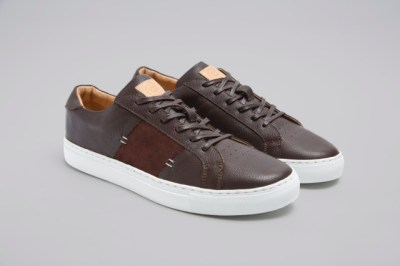
Ecomm Newcomer Greats Is Building A Brand On Sweet, Affordable Sneakers


Someone should probably go make a Wikipedia page for the “Warby Parker model,” since it has rapidly become the go-to business strategy for online retail startups.


The latest addition to the genus Ecommerce Lowoverheadus is Greats, a men’s footwear brand that launched in August. The name derives from the ambition to put a fresh spin on the enduring designs in sneaker history. Although that might sound like copycat design, pretty much every shoe brand iterates on others’ designs; as with most menswear categories, the classics persist in one form or another.


Although their wares are manufactured in the same facilities as upscale lines like Lanvin and Balenciaga, the goal is to create high quality goods while keeping the price point low by cutting out retail overhead. The shoes are priced in the range of $39 to $190, and while early adopters will undoubtedly skew toward sneaker aficionados, the target audience is broad.


“We’re going to make shoes for men with feet,” co-founder Ryan Babenzien said.


wilsonstringsred


Babenzien and his co-founder, Jon Buscemi, are career shoe guys. The former did branding and marketing at K-Swiss and Puma, while Buscemi already has founding another footwear brand, Gourmet Footwear, under his belt.


The company raised an angel round of $500,000 last April, at which point they hadn’t even opened a bank account, Babenzien said. They were pre-selling in beta until their launch on August 6 and only began shipping three weeks ago.


Like Warby, Greats got a lot of early attention from press, including the seal of cool-approval on GQ’s blog. Now the team is looking to raise its seed round.


More than anything, Greats is aiming to be a label, not a startup with a clever business model. When we spoke, Babenzien came back again and again to the idea of building a brand, and, more importantly, to making sure that the DNA of the product is readily recognizable to consumers from the get-go. (Lest we forget that, the site’s URL is greatsbrand.com.)


Greats launched with two styles in three colors each and will be rolling out six additional shoes over the course of the next year. Sneakers are a focus in the first batch, but they’ll also be adding styles like boots and boat shoes into the mix by the end of 2014.


At the moment, Greats’s profit margins are 60%, but the team thinks they can get them higher than that.


“I could have sold this for $120,” Babenzien said, gesturing at the $99 black leather sneakers he was wearing. “And nobody would have blinked. We wanted to make a real statement.”


Part of the team’s long-term roadmap is globalizing Greats. Babenzien said they have been seeing web traffic coming from France, England, Asia, Australia, and Canada.


“The culture of men’s sneakers and footwear is global… we’d like to get to $100 million in revenue in five years,” he said. “I think based on what we’ve seen, it’s well within reach.”


They’ll also be taking on auxiliary categories. Socks, for instance, are something they could get into in the near term. (“That’s more of a strategic category than anything else,” Babenzien said.) Bags and sweatshirts would naturally follow. Because sneakers are part of a youth culture, college age guys form a large portion of Greats’s potential market, and the brand has the opportunity to outfit them from the shoes up.


The company has been moving quickly since April, and they’re wasting no time in getting their products into the offline retail world, as well. On November 9, Greats is opening a hundred square foot shop in a small glass walled shopping complex on Williamsburg’s waterfront, which they’re calling the “Field House” in reference to the brand’s vintage athletic vibe. Customers can buy shoes in the shop, although Babenzien noted that it’s the only physical store in which people will be able to make purchases.


The store will only be open from noon to 7 pm on weekends, the point being to get consumers touching and test driving Greats shoes, rather than serving as a major retail location.


Although having an offline location was always in the team’s playbook, they didn’t expect to make the move so soon. But the Williamsburg space was cheap and didn’t have a lease, so they snatched it up.


Greats is also getting product into the real world with two displays at the upscale LA men’s store Union and at High Point, a sneaker Mecca in Phoenix. The shoes won’t be available for sale at either joint; it’s more about building the brand in the context of other sought-after designers.


The sneaker market for guys is big, and these shoes, with their buttery leather uppers, are sweet. (Unfortunately for the ladies, they’re not running unisex sizes just yet.) The tricky part about online native fashion startups is that the fashion part of the equation — finding the line’s voice and aesthetic point of view — so often loses out to a focus on being online native. Young, creative designers fail all the time out of a lack of business acumen, but a fashion label needs direction, achievable through tight branding and great product. The Greats guys get that.


Source: http://feedproxy.google.com/~r/Techcrunch/~3/eVClssmTstc/
Related Topics: detroit tigers   Ronan Farrow   Kerry Washington   jets   Joanna Krupa  

Thursday, October 31, 2013

Fido's tail wags may reveal more than you think

In this 2012 image provided by the Department of Veterinary Medicine, University of Bari, a dog, bottom right, watches a video of the silhouette of another dog wagging its tail to its left. At top right is an inset image of the dog's heart rate while the dog was watching the video. A few years ago, researchers discovered a subtle difference in how dogs wag their tails. When a dog sees something positive, such as its owner, it tends to wags its tail more to its right. The wagging tends to go left when it sees something negative, like an unfamiliar dominant dog. In the Thursday, Oct. 31, 2013 issue of the journal Current Biology, the same Italian researchers report that other dogs pick up on that difference, and it’s reflected in their behavior and even their heart rates. (AP Photo/Department of Veterinary Medicine, University of Bari)


In this 2012 image provided by the Department of Veterinary Medicine, University of Bari, a dog, bottom right, watches a video of the silhouette of another dog wagging its tail to its left. At top right is an inset image of the dog's heart rate while the dog was watching the video. A few years ago, researchers discovered a subtle difference in how dogs wag their tails. When a dog sees something positive, such as its owner, it tends to wags its tail more to its right. The wagging tends to go left when it sees something negative, like an unfamiliar dominant dog. In the Thursday, Oct. 31, 2013 issue of the journal Current Biology, the same Italian researchers report that other dogs pick up on that difference, and it’s reflected in their behavior and even their heart rates. (AP Photo/Department of Veterinary Medicine, University of Bari)


(AP) — The way Fido wags his tail might reveal more about him than you know. Just ask another dog.

A few years ago, researchers discovered a subtle difference in how dogs wag their tails. When a dog sees something positive, such as its owner, it tends to wags its tail more to its right. The wagging tends to go left when it sees something negative, like an unfamiliar dominant dog.

Now, the same Italian researchers report that other dogs pick up on that difference, and it's reflected in their behavior and even their heart rates. Experts say the tail-wagging difference appears to be one way that dogs gauge how other dogs will respond to them.

"It's just fascinating that dogs pick up on it," said Evan MacLean, co-director of Duke University's Canine Cognition Center. For humans, he said, "it's a difficult thing to see."

MacLean was not involved with the study, reported Thursday in the journal Current Biology.

Giorgio Vallortigara of the University of Trento in Italy, an author of the study, said Fido is not deliberately sending a message. Instead, the tail-wagging behavior stems from how different emotional cues activate different parts of the brain, he said in an email.

For the experiment, Vallortigara and co-authors used videos of a dog or its silhouette, wagging its tail mostly to one side or the other, or not wagging at all. They showed the videos to 43 dogs, including such breeds as Rottweilers, beagles, boxers, border collies and German shepherds as well as mongrels.

When the dog in the video wagged mostly to its left, the sign of a negative response, observer dogs tended to have faster heartbeats than when it wagged the other way or not at all. Their behavior also indicated a higher degree of stress.

Alexandra Horowitz, who studies mental abilities of dogs at Barnard College in New York, said that the wagging difference is probably not a primary signal between Fido and Rover in daily life, but it may play a minor role.

___

Online:

Current Biology: http://www.cell.com/current-biology

___

Malcolm Ritter can be followed at http://www.twitter.com/malcolmritter

Associated PressSource: http://hosted2.ap.org/APDEFAULT/b2f0ca3a594644ee9e50a8ec4ce2d6de/Article_2013-10-31-Tail%20Wagging/id-11d9f6b649794626b3e82ea1d63fda5a
Category: elizabeth smart   Outside Lands  

New climate-studying imager makes first balloon flight

New climate-studying imager makes first balloon flight


[ Back to EurekAlert! ]

PUBLIC RELEASE DATE:

31-Oct-2013


[


| E-mail

]


Share Share

Contact: Cynthia O'Carroll
cynthia.m.ocarroll@nasa.gov
301-286-4787
NASA/Goddard Space Flight Center


Understanding Earth's dynamic climate requires knowledge of more than just greenhouse gases. One of the key measurements scientists measure is reflected solar radiance, or the amount of outgoing sunlight energy scattered from Earth's surface and atmosphere. Watching solar radiances over time helps scientists gauge and better understand environmental changes like global warming.


Earth-observing satellites have provided measurements of solar radiances for many years, but recent technology advances could lead to new measurements with a higher level of accuracy from those currently available. The next generation, higher-accuracy data would enable climate predictions and trends that could be clearly seen using data sets that are much shorter in duration than the current data sets needed for these types of studies, thus enabling faster detection of climate trends and more timely results.


NASA's Earth Science Technology Office is supporting the development of a new generation of scientific instrument that may one day orbit Earth. The HyperSpectral Imager for Climate Science (HySICS), developed by Greg Kopp of the University of Colorado's Laboratory for Atmospheric and Space Physics (LASP), is a testbed demonstrating improved techniques for future space-based radiance studies.


HySICS made its inaugural engineering balloon flight from Fort Sumner, N.M., the morning of Sept. 29. Balloon flights provide realistic, space-like conditions at a fraction of the cost of launching an instrument into space, so is an ideal means of testing new technologies. A 60-story tall balloon lifted HySICS to an altitude of nearly122,000 feet, far above the majority of Earth's atmosphere, heights where the sky is nearly as black as in space. From this vantage point HySICS, aided by the pointing precision of NASA's Wallops Arc Second Pointer (WASP), was able to make measurements of Earth, the sun and the moon during both daylight and night hours.


The hyperspectral imager, which spans a 10 kilometer field of view of Earth from the balloon's altitude, collected radiance data for nearly half of its eight and a half hour flight. The instrument periodically calibrated itself by performing highly accurate radiance scans of the sun and moon. This calibration ensures that the radiance measurements collected of Earth are able to reach the high-accuracy data needs of climate researchers.


After landing safely south of Wheeler, Texas, HySICS was recovered and returned to LASP. The data collected during the engineering flight will be used to improve the instrument over the next year and to further advance the science algorithms used to process the data.


HySICS images scenes onto a single focal plane array at wavelengths between 350 and 2,300 nanometers, covering the extremely important solar and near infrared spectrum containing most of the sun's emitted energy. Using only a single array allows HySICS to be smaller and lighter than many imagers, a feature necessary for cost-effective space-based Earth observing missions.


A second balloon flight is planned for September 2014. During that demonstration flight, HySICS should be able to reach its goal of collecting the most accurate solar radiance measurements (calibrated to the sun to better than 0.2 percent radiometric accuracy) that have ever been made of Earth. In addition, the HySICS lunar observations should provide the highest accuracy radiance measurements ever of the moon, having great value to lunar calibrations for other instruments.


The data HySICS collected on the engineering flight and will collect on the following demonstration flight help to refine the instrumentation needed for radiance and other hyperspectral studies. Not only is HySICS able to act as a space-based radiance testbed, but the measurements the instrument can make will be of great benefit to both the Earth and lunar science communities.

###


For more information on NASA's Earth Science Technology Office, visit:


http://esto.nasa.gov


[ Back to EurekAlert! ]

[


| E-mail


Share Share

]


AAAS and EurekAlert! are not responsible for the accuracy of news releases posted to EurekAlert! by contributing institutions or for the use of any information through the EurekAlert! system.


New climate-studying imager makes first balloon flight


[ Back to EurekAlert! ]

PUBLIC RELEASE DATE:

31-Oct-2013


[


| E-mail

]


Share Share

Contact: Cynthia O'Carroll
cynthia.m.ocarroll@nasa.gov
301-286-4787
NASA/Goddard Space Flight Center


Understanding Earth's dynamic climate requires knowledge of more than just greenhouse gases. One of the key measurements scientists measure is reflected solar radiance, or the amount of outgoing sunlight energy scattered from Earth's surface and atmosphere. Watching solar radiances over time helps scientists gauge and better understand environmental changes like global warming.


Earth-observing satellites have provided measurements of solar radiances for many years, but recent technology advances could lead to new measurements with a higher level of accuracy from those currently available. The next generation, higher-accuracy data would enable climate predictions and trends that could be clearly seen using data sets that are much shorter in duration than the current data sets needed for these types of studies, thus enabling faster detection of climate trends and more timely results.


NASA's Earth Science Technology Office is supporting the development of a new generation of scientific instrument that may one day orbit Earth. The HyperSpectral Imager for Climate Science (HySICS), developed by Greg Kopp of the University of Colorado's Laboratory for Atmospheric and Space Physics (LASP), is a testbed demonstrating improved techniques for future space-based radiance studies.


HySICS made its inaugural engineering balloon flight from Fort Sumner, N.M., the morning of Sept. 29. Balloon flights provide realistic, space-like conditions at a fraction of the cost of launching an instrument into space, so is an ideal means of testing new technologies. A 60-story tall balloon lifted HySICS to an altitude of nearly122,000 feet, far above the majority of Earth's atmosphere, heights where the sky is nearly as black as in space. From this vantage point HySICS, aided by the pointing precision of NASA's Wallops Arc Second Pointer (WASP), was able to make measurements of Earth, the sun and the moon during both daylight and night hours.


The hyperspectral imager, which spans a 10 kilometer field of view of Earth from the balloon's altitude, collected radiance data for nearly half of its eight and a half hour flight. The instrument periodically calibrated itself by performing highly accurate radiance scans of the sun and moon. This calibration ensures that the radiance measurements collected of Earth are able to reach the high-accuracy data needs of climate researchers.


After landing safely south of Wheeler, Texas, HySICS was recovered and returned to LASP. The data collected during the engineering flight will be used to improve the instrument over the next year and to further advance the science algorithms used to process the data.


HySICS images scenes onto a single focal plane array at wavelengths between 350 and 2,300 nanometers, covering the extremely important solar and near infrared spectrum containing most of the sun's emitted energy. Using only a single array allows HySICS to be smaller and lighter than many imagers, a feature necessary for cost-effective space-based Earth observing missions.


A second balloon flight is planned for September 2014. During that demonstration flight, HySICS should be able to reach its goal of collecting the most accurate solar radiance measurements (calibrated to the sun to better than 0.2 percent radiometric accuracy) that have ever been made of Earth. In addition, the HySICS lunar observations should provide the highest accuracy radiance measurements ever of the moon, having great value to lunar calibrations for other instruments.


The data HySICS collected on the engineering flight and will collect on the following demonstration flight help to refine the instrumentation needed for radiance and other hyperspectral studies. Not only is HySICS able to act as a space-based radiance testbed, but the measurements the instrument can make will be of great benefit to both the Earth and lunar science communities.

###


For more information on NASA's Earth Science Technology Office, visit:


http://esto.nasa.gov


[ Back to EurekAlert! ]

[


| E-mail


Share Share

]


AAAS and EurekAlert! are not responsible for the accuracy of news releases posted to EurekAlert! by contributing institutions or for the use of any information through the EurekAlert! system.


Source: http://www.eurekalert.org/pub_releases/2013-10/nsfc-nci103113.php
Related Topics: bob costas   Mike Wayans   blobfish   usc football   Jamaal Charles  

Automated system promises precise control of medically induced coma

Automated system promises precise control of medically induced coma


[ Back to EurekAlert! ]

PUBLIC RELEASE DATE:

31-Oct-2013


[


| E-mail

]


Share Share

Contact: Sue McGreevey
smcgreevey@partners.org
617-724-2764
Massachusetts General Hospital


Successful animal study may lead to computer-controlled general anesthesia delivery


Putting patients with severe head injuries or persistent seizures into a medically induced coma currently requires that a nurse or other health professional constantly monitor the patient's brain activity and manually adjust drug infusion to maintain a deep state of anesthesia. Now a computer-controlled system developed by Massachusetts General Hospital (MGH) investigators promises to automate the process, making it more precise and efficient and opening the door to more advanced control of anesthesia. The team, including colleagues from Massachusetts Institute of Technology (MIT), reports successfully testing their approach in animals in the open access journal PLOS Computational Biology.


"People have been interested for years in finding a way to control anesthesia automatically," says Emery Brown, MD, PhD, of the MGH Department of Anesthesia, Critical Care and Pain Medicine, senior author of the report. "To use an analogy that compares giving anesthesia to flying a plane, the way it's been done is like flying a direct course for hours or even days without using an autopilot. This is really something that we should have a computer doing."


As part of a long-term project investigating the physiological basis of general anesthesia, Brown's team at MGH and MIT has identified and studied patterns of brain activity reflecting various states of anesthesia. One of the deepest states called burst suppression is characterized by an electroencephalogram (EEG) pattern in which brief periods of brain activity the bursts are interrupted by stretches of greatly reduced activity that can last for seconds or longer. When patients with serious head injuries that cause a buildup of pressure within the skull or those with persistent seizures are put into a medically induced coma to protect against additional damage, the goal is to maintain brain activity in a state of burst suppression.


Although anesthesiologists have had computer-assisted technologies for many years, no FDA-approved system exists that completely controls anesthesia administration based on continuous monitoring of a patient's brain activity. Until the current study, Brown notes, no one had demonstrated the level of control required for a completely automated system. Keeping patients at a precise level of brain activity for several days, as required for medically induced coma, appeared to be both a feasible goal and one that cried out for the sort of computer-controlled system called a brain-machine interface.


Adapting programs they had previously developed to analyze the activity of neurons, Brown's team developed algorithms to read and analyze an EEG pattern in real time and determine a target level of brain activity in this case the stage of burst suppression. Based on that target, an automated control device adjusts the flow of an anesthetic drug to achieve the desired brain state, and real-time analysis of the continuous EEG readings is fed back to the system to insure maintenance of the target. When the researchers tested their system in a rodent model, the actual EEG-based measure of burst suppression tracked the target trajectory almost exactly.


"As far as we know, these are the best results for automated control of anesthesia that have ever been published," says Brown, who is the Warren M. Zapol Professor of Anesthesia at Harvard Medical School and the Edward Hood Taplin Professor of Medical Engineering and Computational Neuroscience at MIT. "We're now in discussions with the FDA for approval to start testing this in patients." The MGH has also applied for a patent for the technology.


Among the benefits of such a system, Brown explains, would be the ability to maintain medical coma at a more precise, consistent level than can be done manually and using lower doses of anesthetic drugs, a reduction that is possible with any computer-assisted technology. Eliminating the need to devote one intensive-care nurse on each shift to continuous monitoring of one patient would significantly change ICU staffing needs. Further development of the system to control and maintain the full range of anesthesia states should introduce a powerful new tool to the entire field.


###

Lead authors of the PLOS Computational Biology report are Maryam Shanechi, PhD, now at Cornell University, and Jessica Chemali, MGH Department of Anesthesia, Critical Care and Pain Medicine. Additional co-authors are Max Liberman and Ken Solt, MD, MGH Anesthesia. Primary support for this work is through an National Institutes of Health Director's Pioneer Award to Brown.


Massachusetts General Hospital, founded in 1811, is the original and largest teaching hospital of Harvard Medical School. The MGH conducts the largest hospital-based research program in the United States, with an annual research budget of more than $775 million and major research centers in AIDS, cardiovascular research, cancer, computational and integrative biology, cutaneous biology, human genetics, medical imaging, neurodegenerative disorders, regenerative medicine, reproductive biology, systems biology, transplantation biology and photomedicine.


[ Back to EurekAlert! ]

[


| E-mail


Share Share

]


AAAS and EurekAlert! are not responsible for the accuracy of news releases posted to EurekAlert! by contributing institutions or for the use of any information through the EurekAlert! system.


Automated system promises precise control of medically induced coma


[ Back to EurekAlert! ]

PUBLIC RELEASE DATE:

31-Oct-2013


[


| E-mail

]


Share Share

Contact: Sue McGreevey
smcgreevey@partners.org
617-724-2764
Massachusetts General Hospital


Successful animal study may lead to computer-controlled general anesthesia delivery


Putting patients with severe head injuries or persistent seizures into a medically induced coma currently requires that a nurse or other health professional constantly monitor the patient's brain activity and manually adjust drug infusion to maintain a deep state of anesthesia. Now a computer-controlled system developed by Massachusetts General Hospital (MGH) investigators promises to automate the process, making it more precise and efficient and opening the door to more advanced control of anesthesia. The team, including colleagues from Massachusetts Institute of Technology (MIT), reports successfully testing their approach in animals in the open access journal PLOS Computational Biology.


"People have been interested for years in finding a way to control anesthesia automatically," says Emery Brown, MD, PhD, of the MGH Department of Anesthesia, Critical Care and Pain Medicine, senior author of the report. "To use an analogy that compares giving anesthesia to flying a plane, the way it's been done is like flying a direct course for hours or even days without using an autopilot. This is really something that we should have a computer doing."


As part of a long-term project investigating the physiological basis of general anesthesia, Brown's team at MGH and MIT has identified and studied patterns of brain activity reflecting various states of anesthesia. One of the deepest states called burst suppression is characterized by an electroencephalogram (EEG) pattern in which brief periods of brain activity the bursts are interrupted by stretches of greatly reduced activity that can last for seconds or longer. When patients with serious head injuries that cause a buildup of pressure within the skull or those with persistent seizures are put into a medically induced coma to protect against additional damage, the goal is to maintain brain activity in a state of burst suppression.


Although anesthesiologists have had computer-assisted technologies for many years, no FDA-approved system exists that completely controls anesthesia administration based on continuous monitoring of a patient's brain activity. Until the current study, Brown notes, no one had demonstrated the level of control required for a completely automated system. Keeping patients at a precise level of brain activity for several days, as required for medically induced coma, appeared to be both a feasible goal and one that cried out for the sort of computer-controlled system called a brain-machine interface.


Adapting programs they had previously developed to analyze the activity of neurons, Brown's team developed algorithms to read and analyze an EEG pattern in real time and determine a target level of brain activity in this case the stage of burst suppression. Based on that target, an automated control device adjusts the flow of an anesthetic drug to achieve the desired brain state, and real-time analysis of the continuous EEG readings is fed back to the system to insure maintenance of the target. When the researchers tested their system in a rodent model, the actual EEG-based measure of burst suppression tracked the target trajectory almost exactly.


"As far as we know, these are the best results for automated control of anesthesia that have ever been published," says Brown, who is the Warren M. Zapol Professor of Anesthesia at Harvard Medical School and the Edward Hood Taplin Professor of Medical Engineering and Computational Neuroscience at MIT. "We're now in discussions with the FDA for approval to start testing this in patients." The MGH has also applied for a patent for the technology.


Among the benefits of such a system, Brown explains, would be the ability to maintain medical coma at a more precise, consistent level than can be done manually and using lower doses of anesthetic drugs, a reduction that is possible with any computer-assisted technology. Eliminating the need to devote one intensive-care nurse on each shift to continuous monitoring of one patient would significantly change ICU staffing needs. Further development of the system to control and maintain the full range of anesthesia states should introduce a powerful new tool to the entire field.


###

Lead authors of the PLOS Computational Biology report are Maryam Shanechi, PhD, now at Cornell University, and Jessica Chemali, MGH Department of Anesthesia, Critical Care and Pain Medicine. Additional co-authors are Max Liberman and Ken Solt, MD, MGH Anesthesia. Primary support for this work is through an National Institutes of Health Director's Pioneer Award to Brown.


Massachusetts General Hospital, founded in 1811, is the original and largest teaching hospital of Harvard Medical School. The MGH conducts the largest hospital-based research program in the United States, with an annual research budget of more than $775 million and major research centers in AIDS, cardiovascular research, cancer, computational and integrative biology, cutaneous biology, human genetics, medical imaging, neurodegenerative disorders, regenerative medicine, reproductive biology, systems biology, transplantation biology and photomedicine.


[ Back to EurekAlert! ]

[


| E-mail


Share Share

]


AAAS and EurekAlert! are not responsible for the accuracy of news releases posted to EurekAlert! by contributing institutions or for the use of any information through the EurekAlert! system.


Source: http://www.eurekalert.org/pub_releases/2013-10/mgh-asp103113.php
Tags: dracula   Government Shutdown Over   Presidents Cup Streaker   Mary Lambert   Duck Dynasty  

Nikon hurt by falling DSLR prices, but still faring better than Canon

Nikon's finance department has been forced to revise its quarterly revenue forecast in a southerly direction due to the fact that entry-level DSLRs are selling for lower prices than it originally expected. One of the culprits is likely to be the D3200 shown above, which is currently going on Amazon ...


Source: http://feeds.engadget.com/~r/weblogsinc/engadget/~3/6oc06qAml6o/
Similar Articles: aapl   james taylor   Ronan Farrow   auburn football   robin thicke